Hike leader: Dave Sclanders Report: Erica Clark-Rossam Number of hikers 13
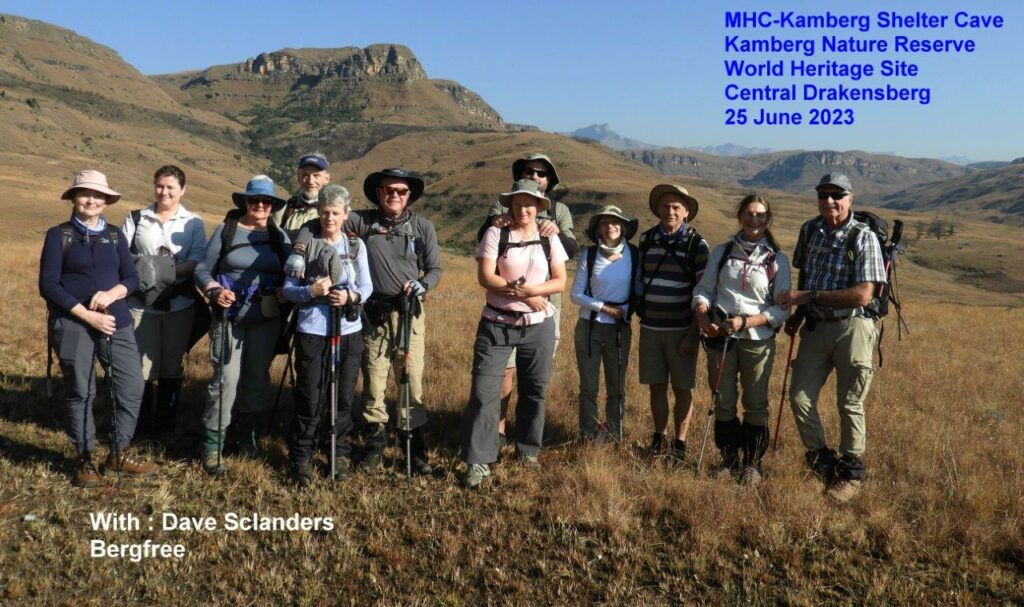
Yesterday, on an unexpectedly mild – short-sleeves and shorts – sunny winter’s day, Dave Sclanders led thirteen of us on a hike to fascinating rock art in mountain shelters of the Kamberg Nature Reserve.
The Kamberg itself was a short distance behind us and was given the Dutch name for the Cox-comb shape of the peak. We walked at a really comfortable pace stopping, now and then, to hear some of the history and geology of the Kamberg.
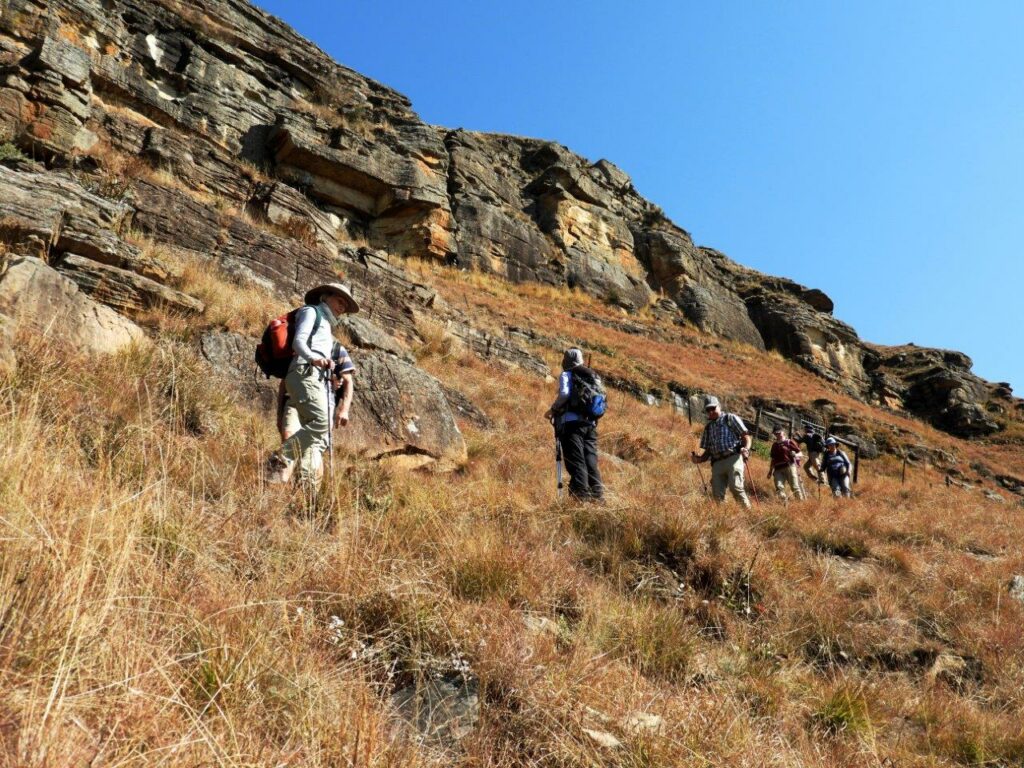
We were pleasantly surprised that a ten kilometre hike with spectacular views and some nicely demanding climbs only took six hours including snack and lunch breaks. For one person on her first Berg hike, it was manageable and thoroughly enjoyable.
Before we set off , Dave gave an intriguing history of the area and named the peaks and points of interest that lay ahead of us. The geology of the mountain range includes a clearly visible fault-line that runs a distance across the reserve. He also pointed out an interesting juncture or wide-V bend in the Berg formed with Giant’s Castle at the centre, in the near distance. Colourful names, such as Goldilocks and the Three Bears and Gladstone’s Nose, given to rock features, speak of the strong British presence since the 1800s. We were told about the significance of Bushman’s River Pass, visible to the north of Giant’s Castle, and the pursuit of Zulu Chief Langalibalele by Major Anthony W. Durnford (later Colonel) , 55 Officers and men of the Natal and Karkloof Carbineers and 25 Basuto and a Native Interpreter .
Not knowing the area well, he mistakenly took a detour over very difficult terrain in bad weather which prompted most of the men with him to fall back It seems he was badly stabbed paralysing his left arm for life. He was later seen in action at Isandlwana where was killed.
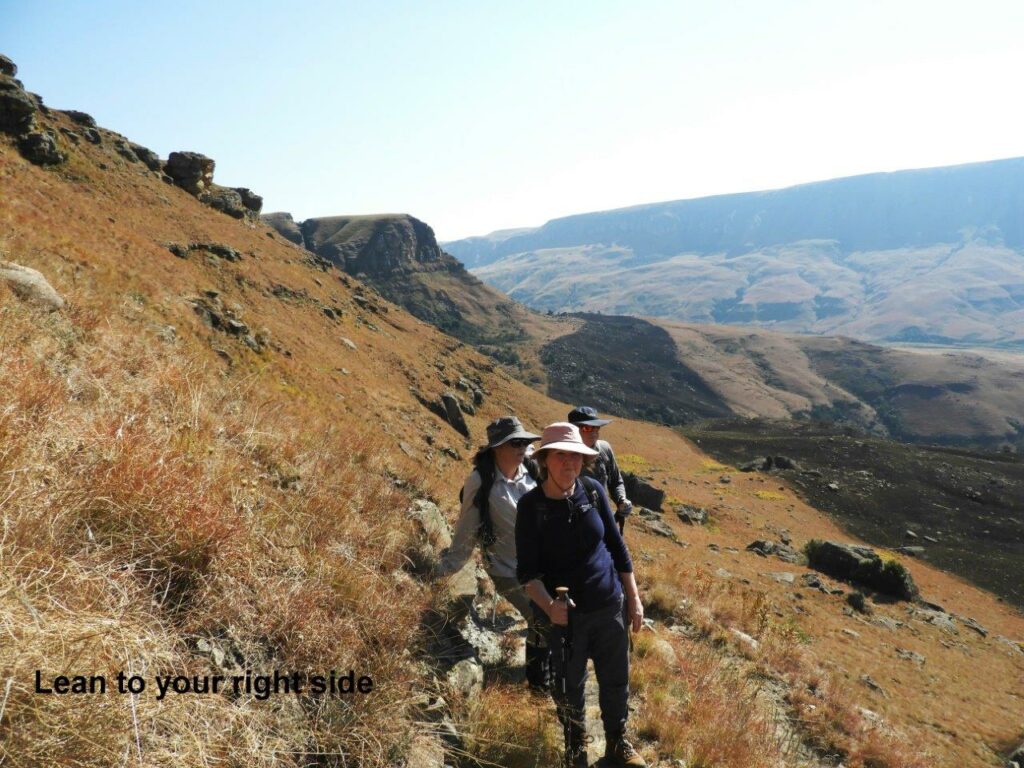
Lean to your right side
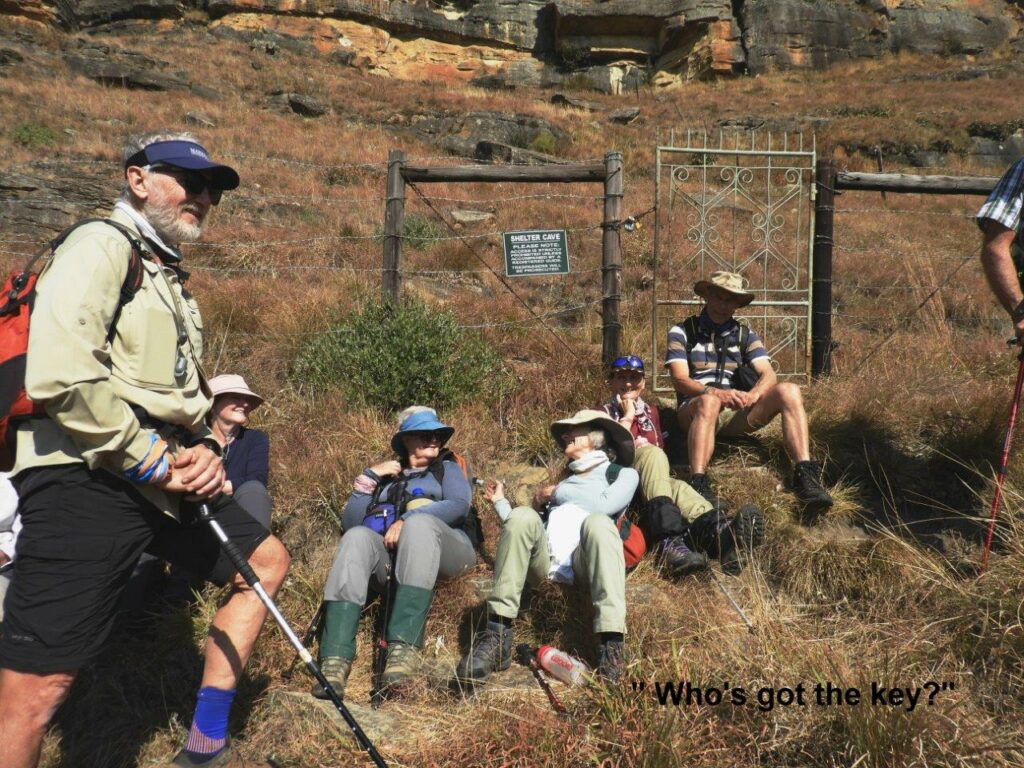
"Who's got the key?"
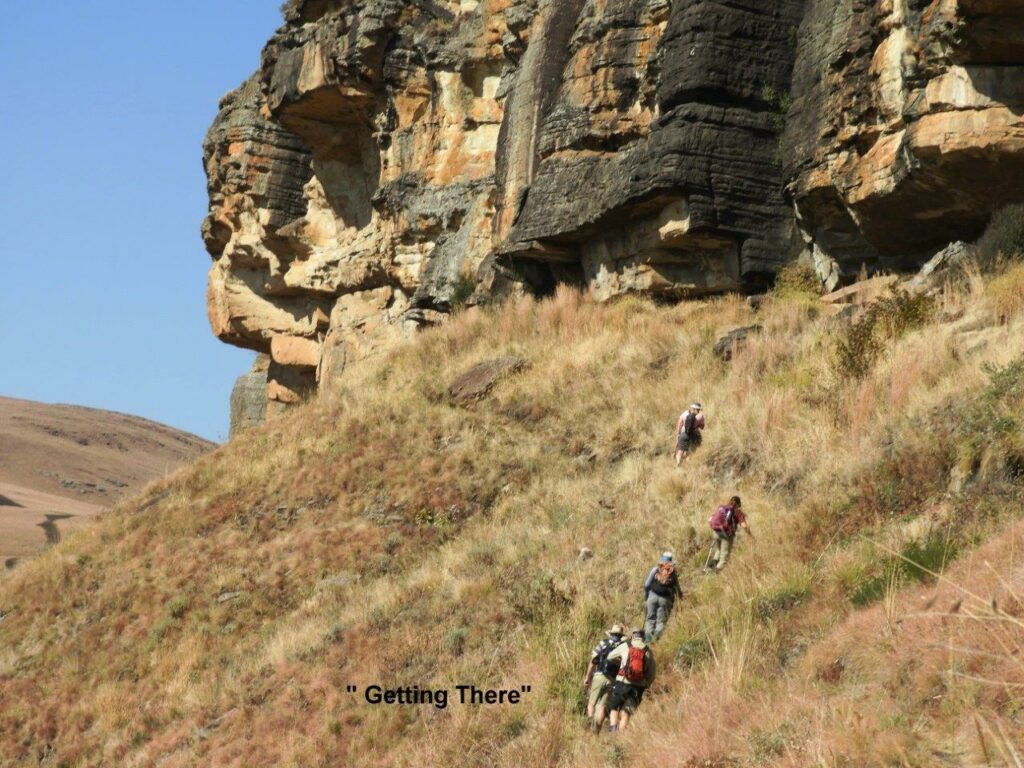
""Getting there"
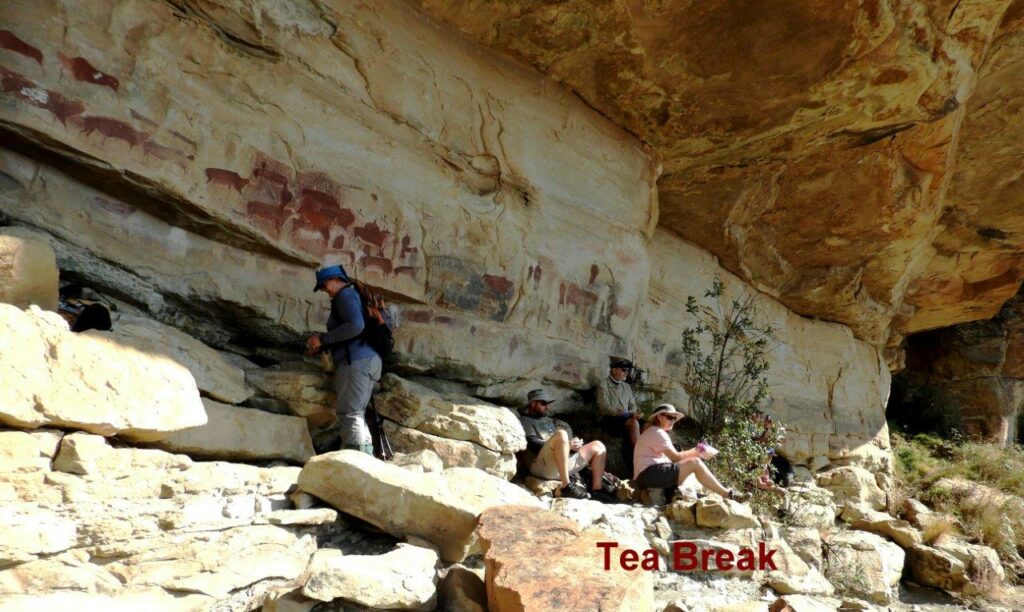
"Tea Break"
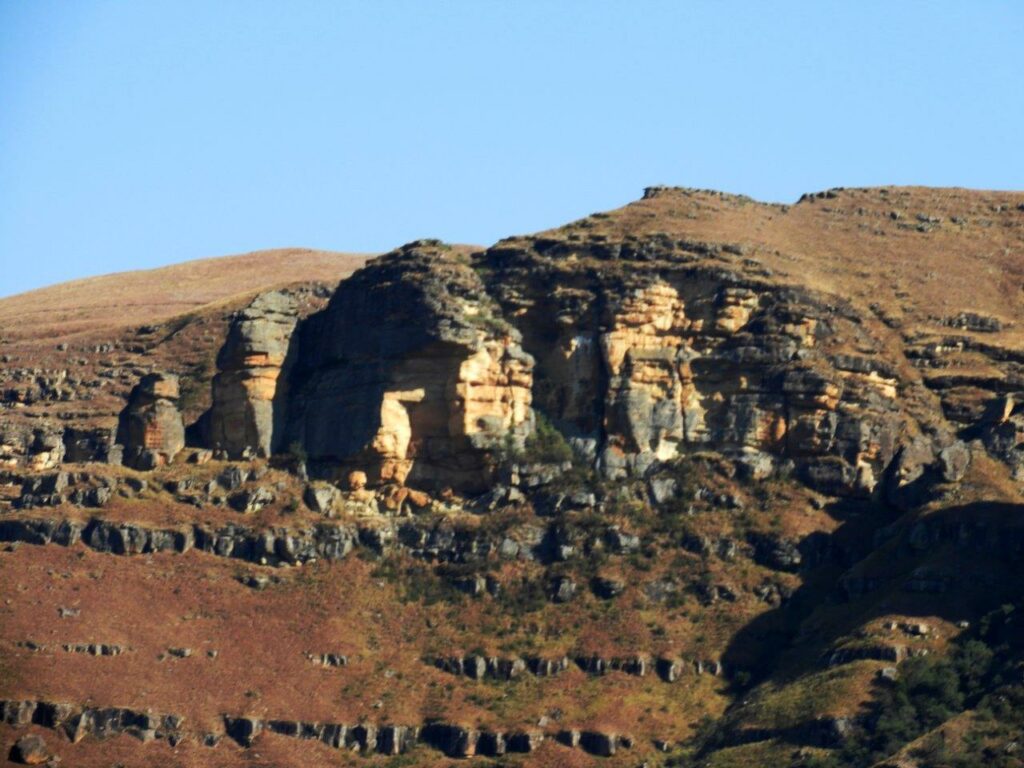
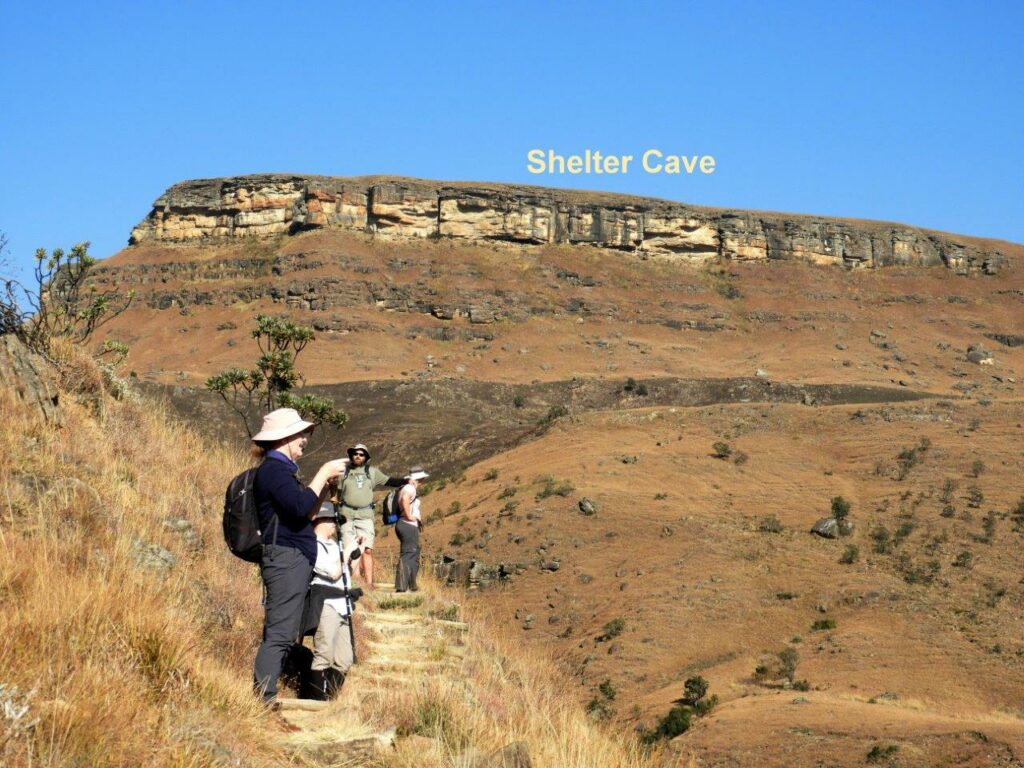
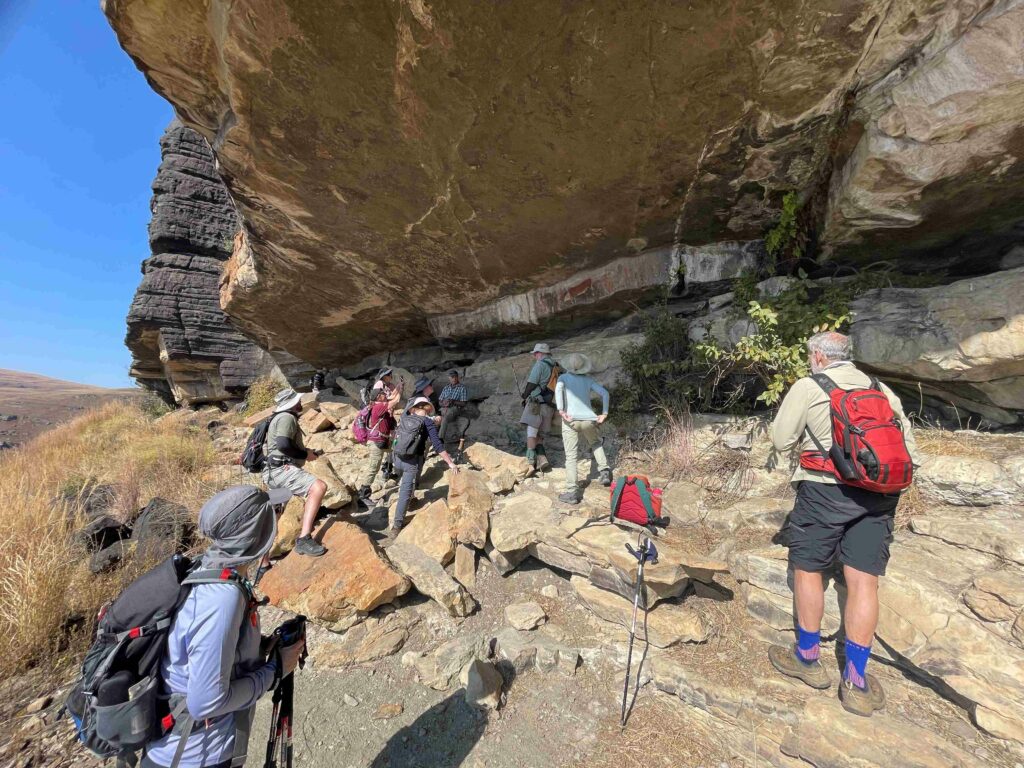
After about three kilometres of easy contour paths, we climbed to the first overhang where rock paintings are to be found. From above the roof of the shelter a narrow stream flowed down in front of us as a waterfall.
Dave explained that researchers believe that only the shamans of the Bushman groups used shelters of this kind and treated them as sacred. No evidence of domestic remnants have been found nor does the subject matter of the paintings reflect daily life.
The waterfall provided cleansing before the painting rituals began. This shelter, like the next one we visited, depicts eland, buck, shamans and bushmen hunters in various degrees of artistic sophistication.
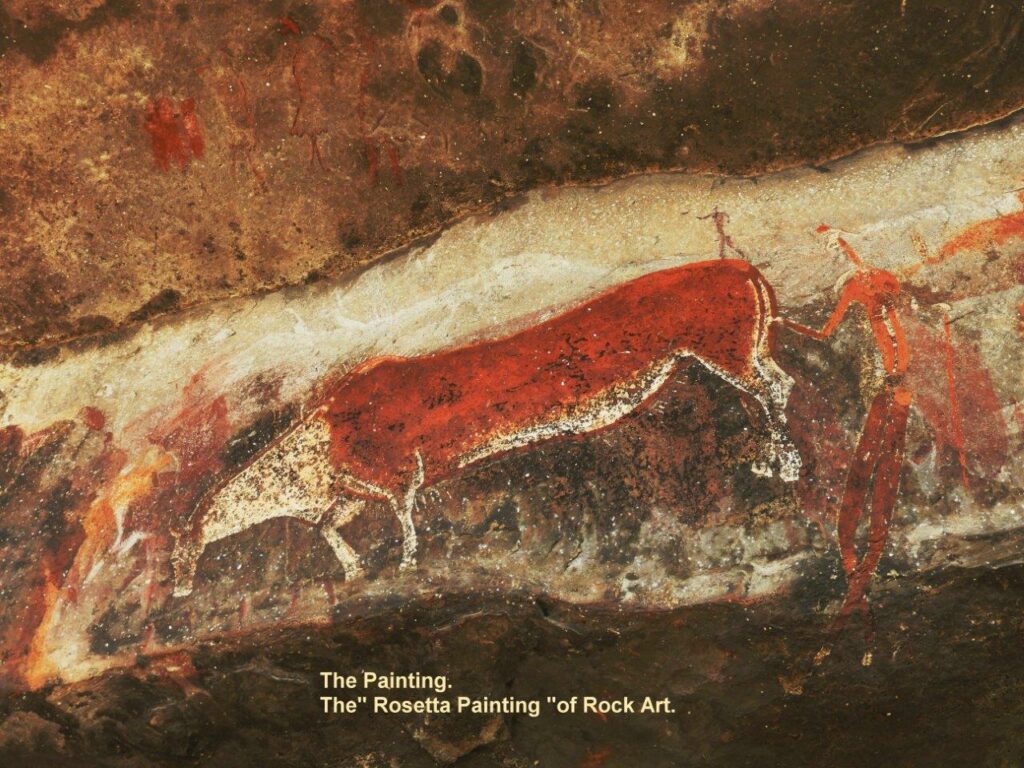
The Painting. The "Rosetta Painting" of rock art
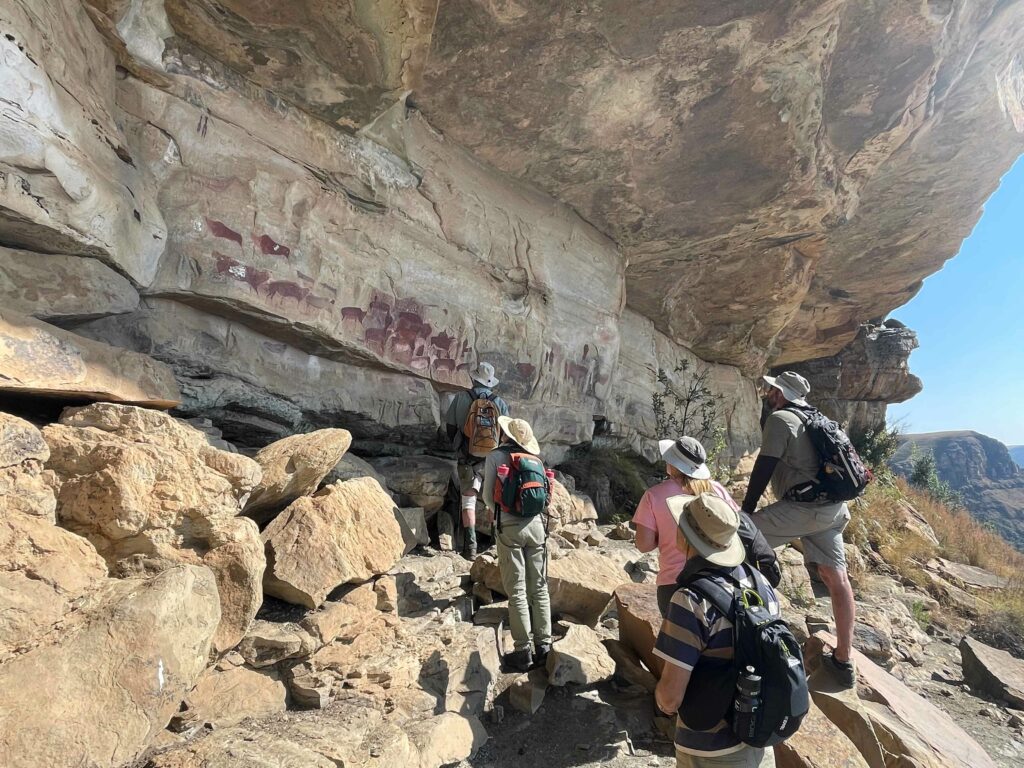
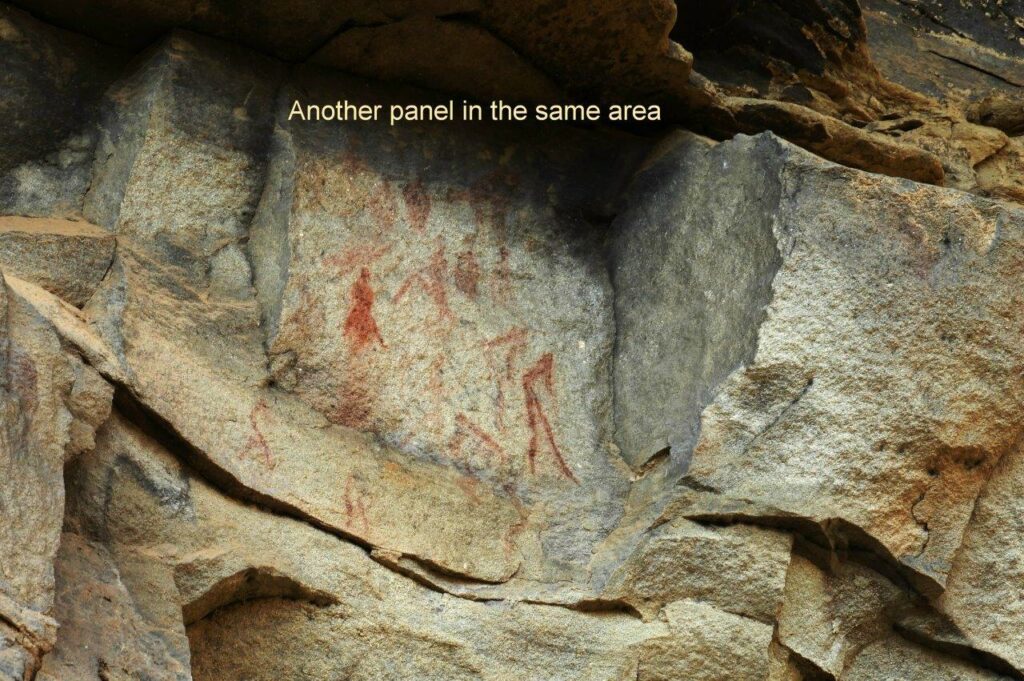
Änother panel in the same area
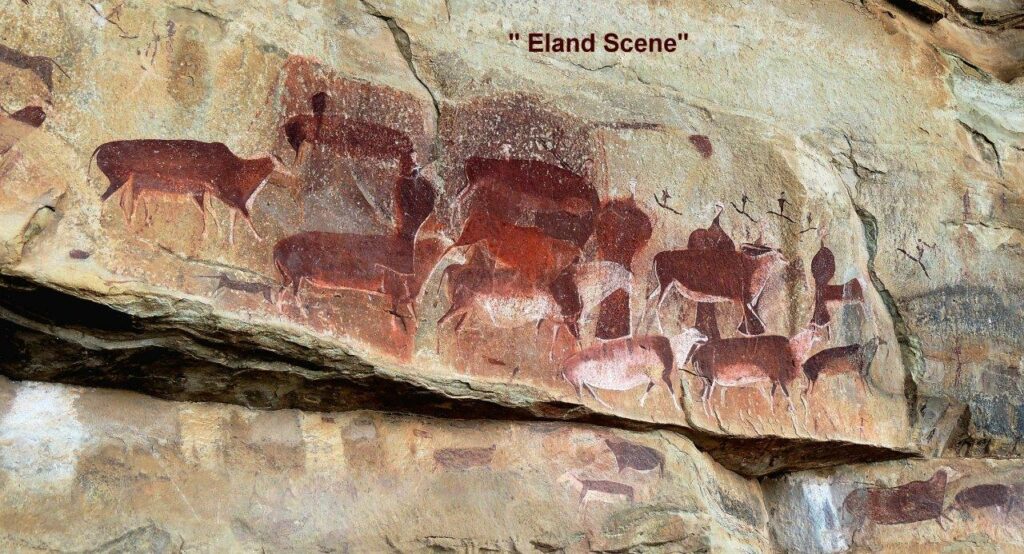
This shelter, like the next one we visited, depicts eland, buck, shamans and bushmen hunters in various degrees of artistic sophistication. The second shelter, closer to the crest of the mountain and rightly celebrated, is suggestive of four phases of skill, from simple monochrome and outlined images to poly-chrome, 3-dimensional and skilfully shaded images. The substances used have been identified as finely crushed rock of various colours (mostly ochre, browns, white and what modern artists would call shades of ox-blood red), blood and fat.
Fine “brushes” from coarse animal hair and smearing by hand are said to have been the means of application. Various theories have been offered for why images were painted over existing ones including the possibility that when a shaman died his successor could overlay earlier painting. The ritual art we saw did not show foreshortening or perspective as is the case in some of the other Berg rock art. Underlying images seem to be more simple than the superimposed ones and not an attempt at depth.
Eland scene
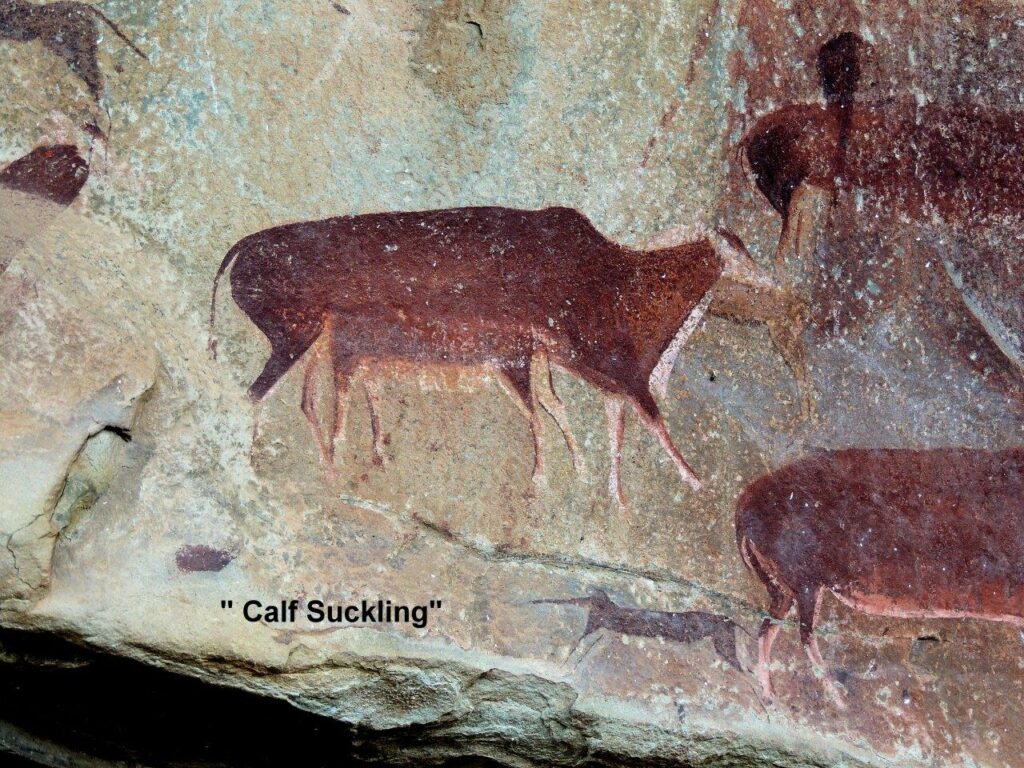
Calf suckling
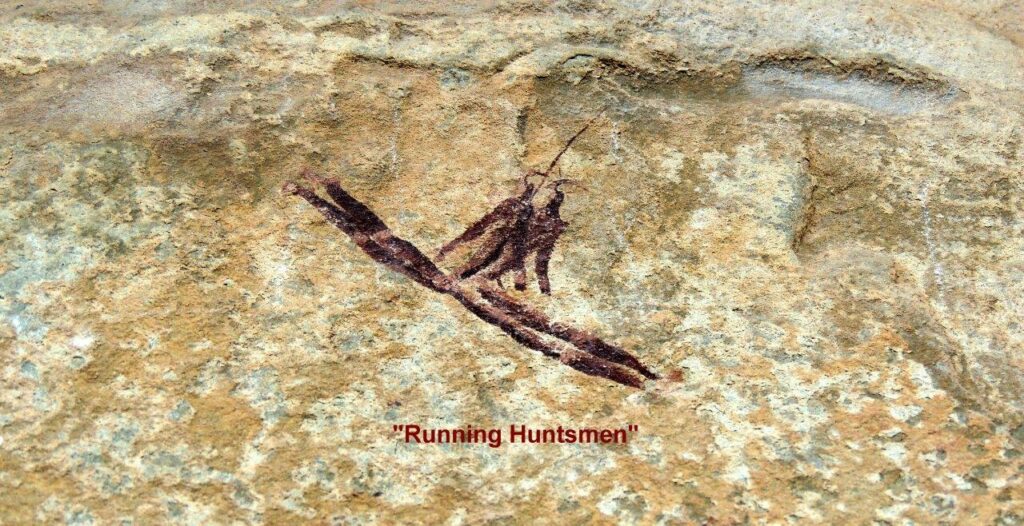
Running Huntsmenn
What was especially intriguing was imagery of shamans taking on the physical characteristics and some of the life force of the depicted eland. Hooves are evident on the elongated, shaman figures and energy lines radiate from both the animal and shaman. It is believed that the artist-shaman painted in states of trance. Altered states of consciousness do allow access to memory of visual imagery far more effectively than is possible with conscious mind only. Bushmen, as hunter gatherers and dependent for survival on the natural environment, were adept observers with honed recall. Several books and articles are available to learn what is understood about the mysteries of style and content of Bushman or San art. We are grateful to those who take the time to record a fast disappearing cultural record in KZN. Sadly we saw where people had started to deface the paintings by adding their chalky scratchings and even a name.
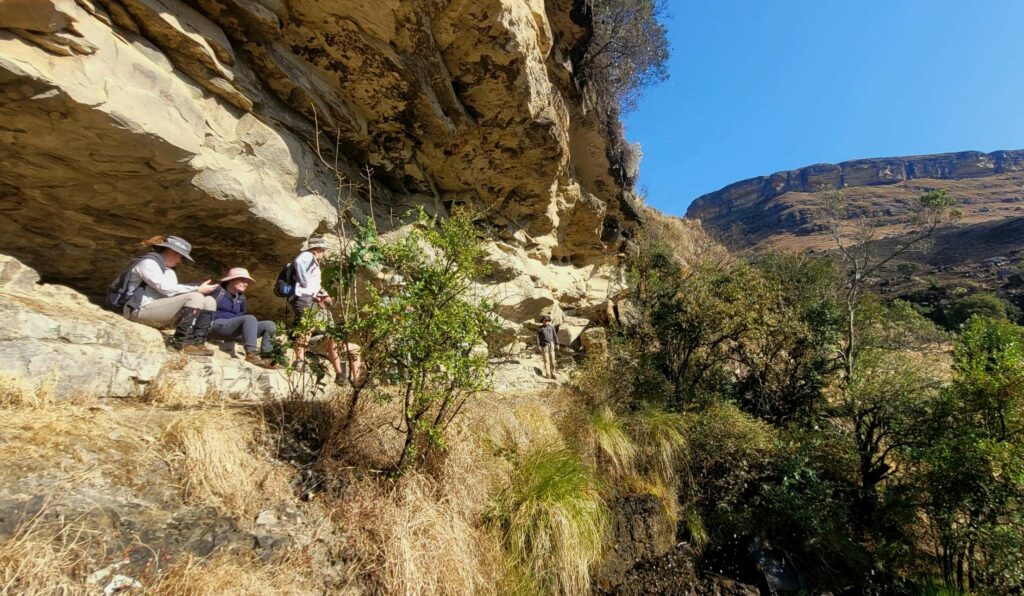
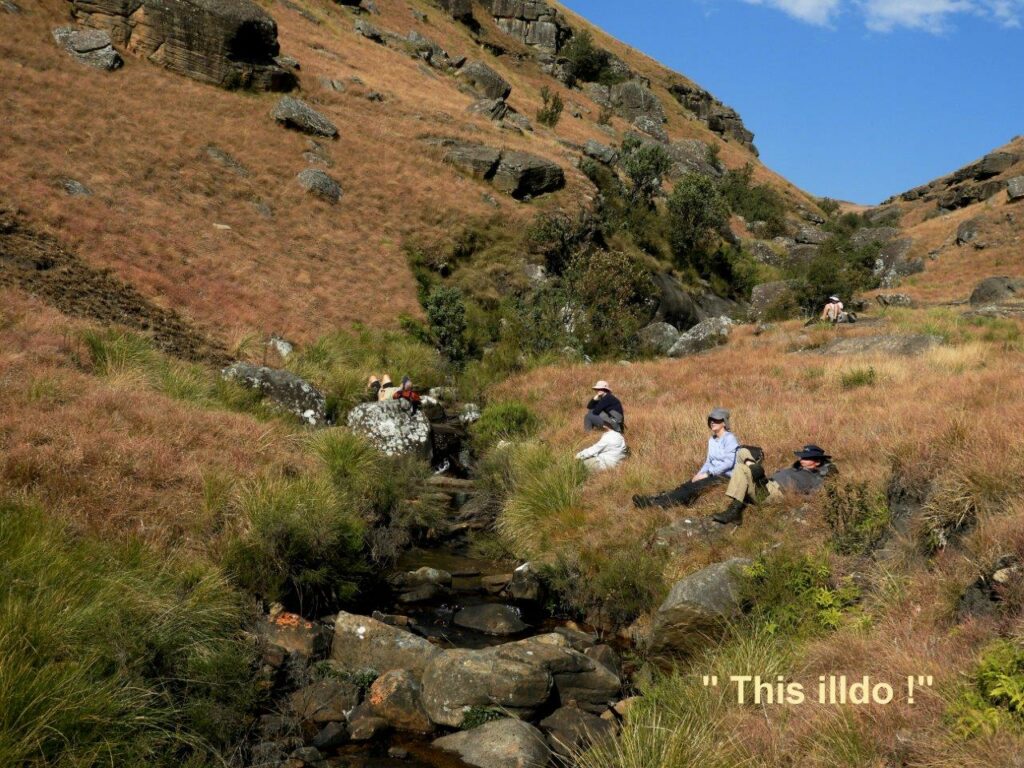
After the excitement of photographing the art and taking in the views of the paths we had taken, the ever-changing sky and endless layers of vegetation and mountain folds, we headed for a river close by for lunch and a rest to take in the peace of the mountains.
We saw the occasional crow, vulture and several baboons in the distance. We also had time to look at the geology around us and ask the inevitable questions about how it was shaped over eons of time.
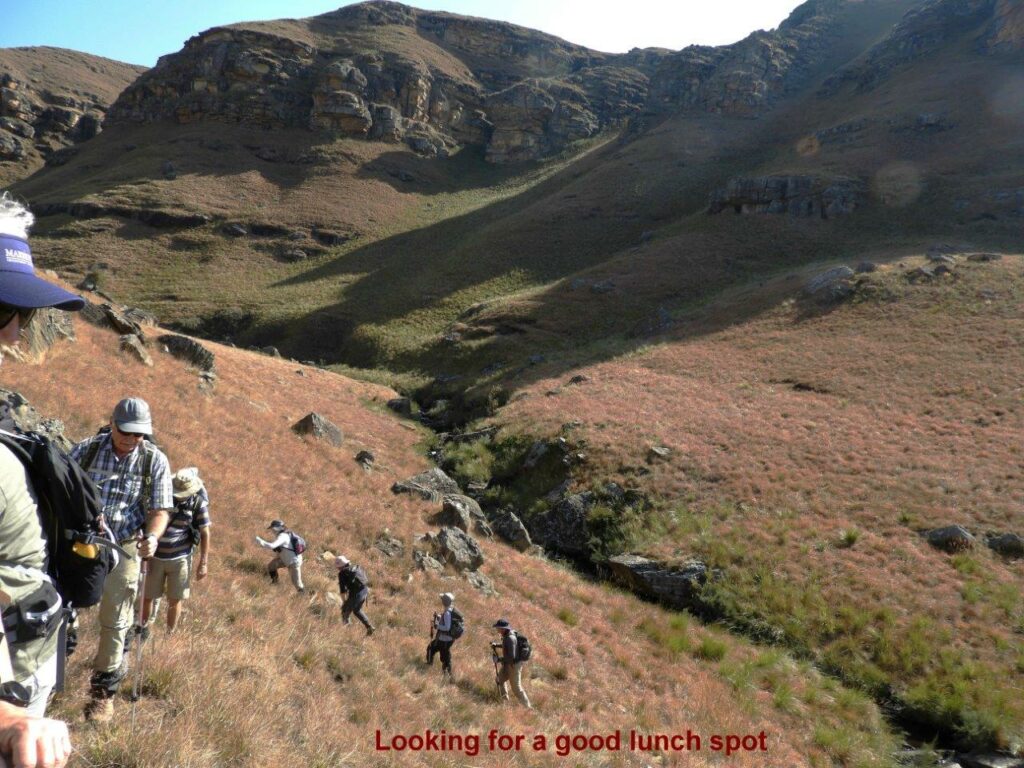
Looking for a good lunch spot
This illdo!
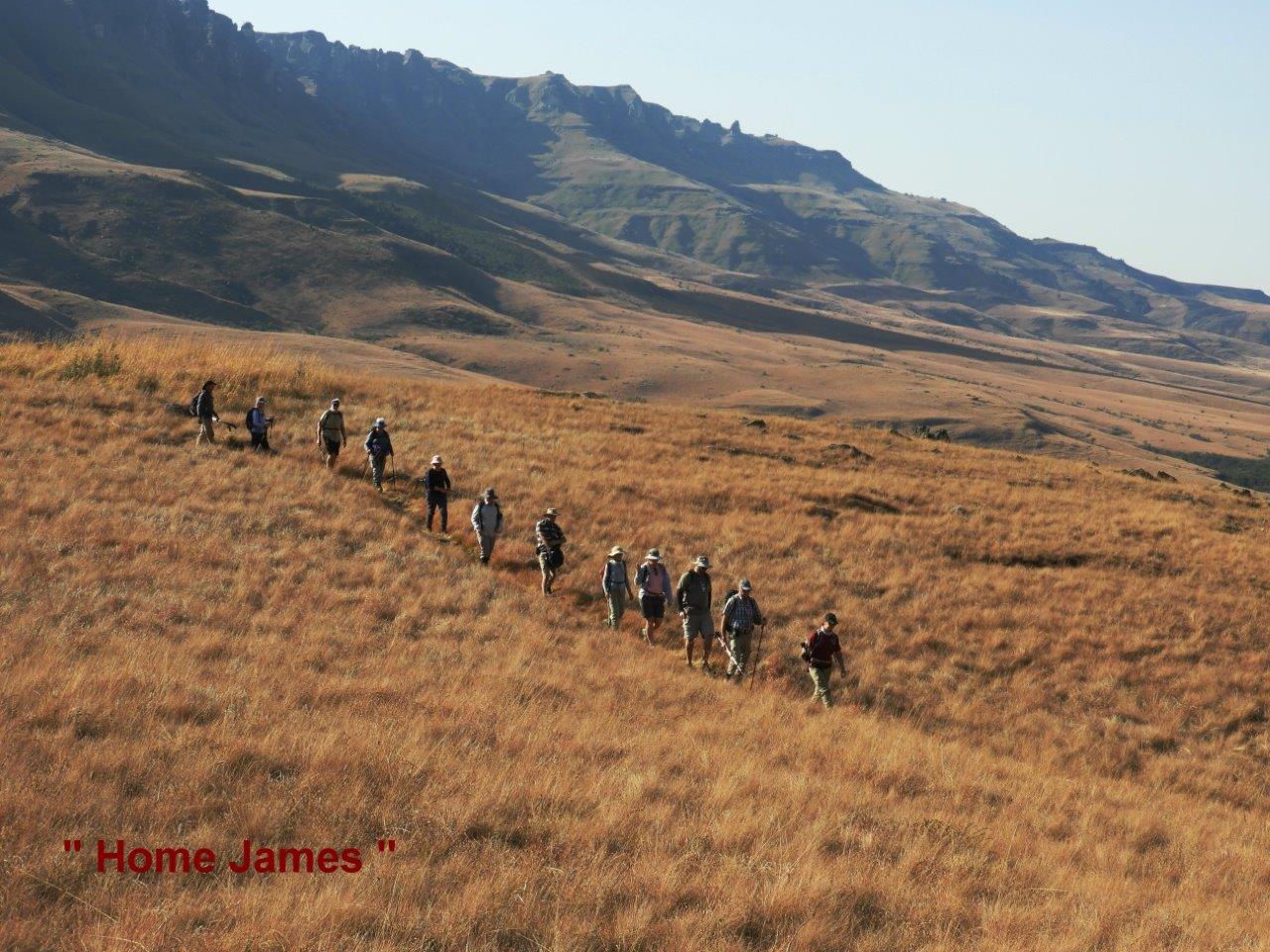
As always, the walk back seemed to happen quite quickly. On return, we were able to use the wonderfully clean toilets and take note of the chalets available for overnight stays. A backpackers lodge is under construction.
For anyone wanting more depth of understanding of the rock art, a video and presentation room are on site.