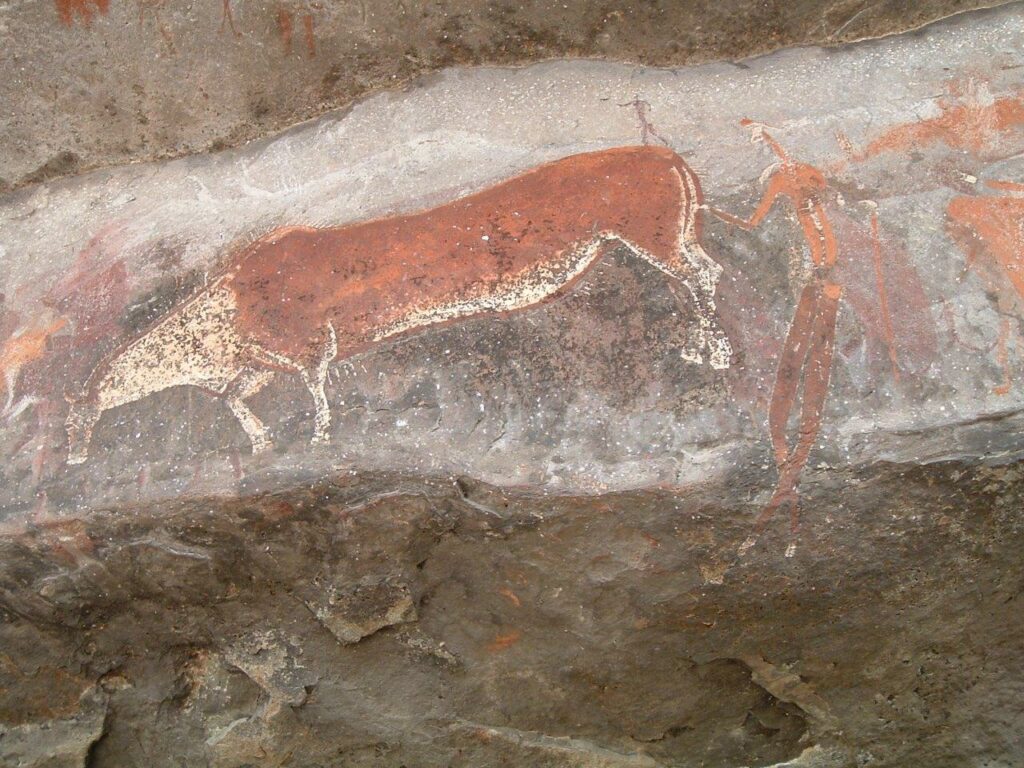
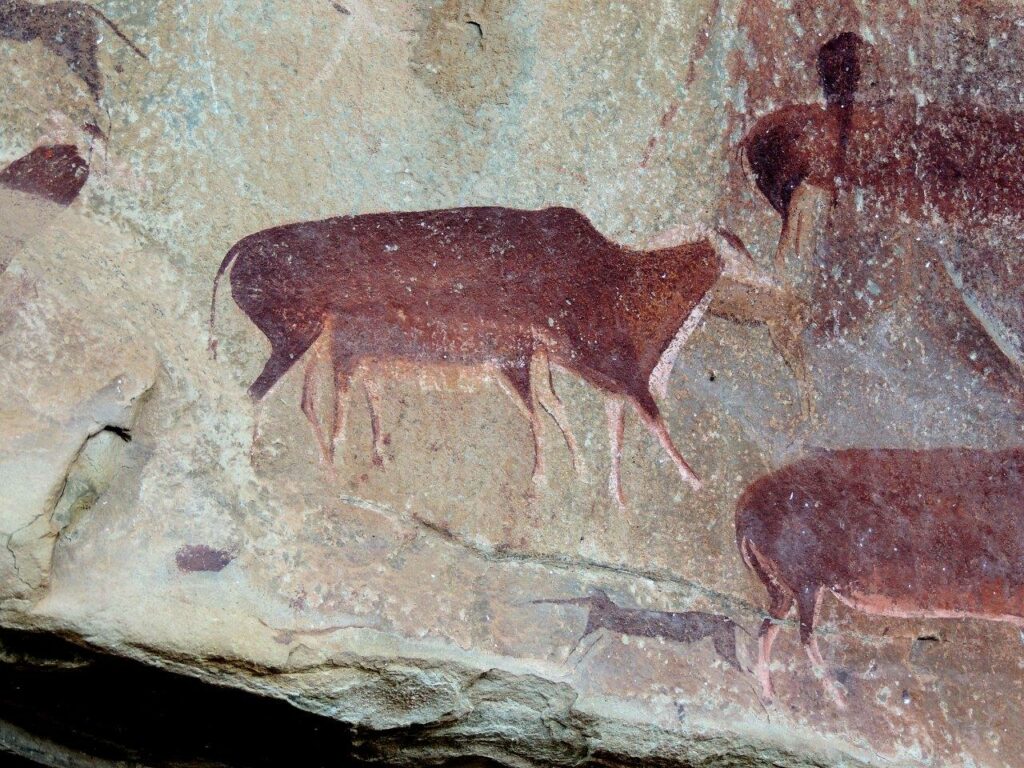
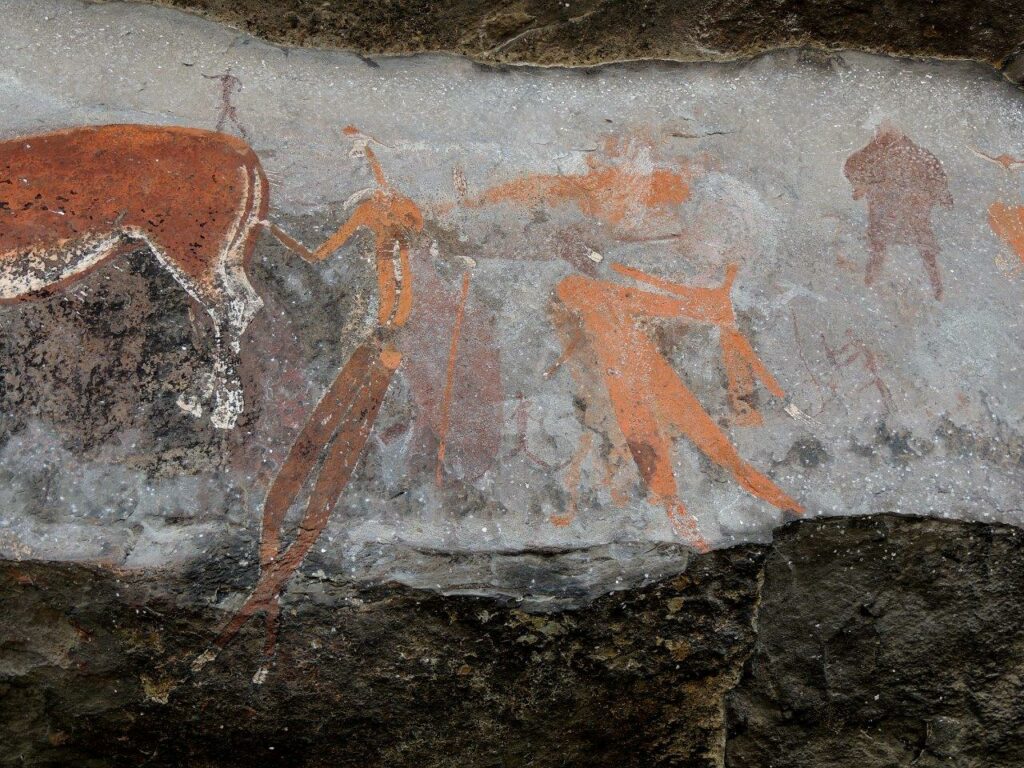
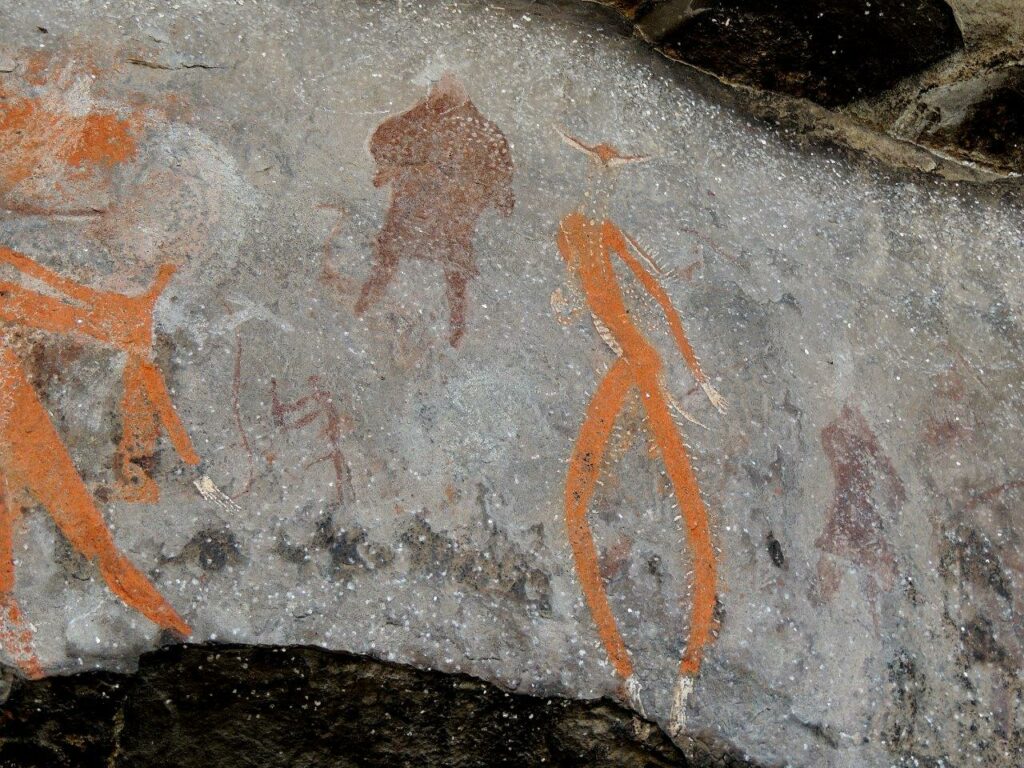
Kamberg Nature Reserve is home to one of the most famous and well known rock art sites in the world.It is known as the “Rosetta Stone” of ancient Rock Art.. It is right on our doorstep, yet very few of us know about it or have visited the sight. It is an easy half day excursion from the Kamberg KZN Wildlife office.
On Sunday morning a happy excited group from the club met at Kamberg to spend the day in the area. The first part of the path to the stream crossing is fairly easy , with a gradual climb to Shelter Falls, where 3 paintings can be seen high up and behind the waterfall.
The way offers great scenery from the path down to the Kamberg Dams far below, and a high mountain ridge on your left This steep, rugged mountain slope gives a hint of what the berg is like just a short way away from you.
As you round the corner the high cliffs to your right shows a band of caves high up near the crest, those cliffs are your goal for the morning climb. Keep an eye out for the “Sungazer”
A short rest here ,in the shade of the caves and right next to Shelter Waterfall before you cross the river, where the climb starts. Folk law indicates that the San people of the area, and even modern Health Healers believe that this water flowing down the mountain has magical properties. The path is good , but it is uphill all the way to the locked gate at the entrance to the sight. The pull up the mountain is well worth the effort, take it in short stretches and take the time to revel in the views below and around you. Just make sure that you have the key to the gate which is at the office where you pay your dues, otherwise you miss your missiont for the day
On entering the shelter you come face to face with a myriad of incredible rock art , however there are certain rules to remember for you to help preserve this incredible art. Don’t lean on any rocks that may have paintings, don’t touch, don’t try to clean or use any liquid to wipe the surface. Remember the paints used are all natural ingredients and are easily damaged, and worst of all can never be replaced. Have a careful look at the art, it is intricate, delicate and very precise. One sort of forgets that this art is painted on rock surfaces, using the basics of bird feathers , grass stems and sharpened branches ,as well as sharpened bone and porcupine quills , not on a smooth canvas with modern painting equipment
Take only pictures and stay well away from the walls and rocks at the bottom of the shelter walls
While resting before the walk back down, take time to sit and reflect on the view below, try to imagine what the San people who did these paintings may have seen from this high view point. Probably, vast areas of green grazing, sparkling rivers and streams, and large herds of antelope on the grazing below, and on their left the high daunting cliffs of the Giant Drakensberg walls, and in the winter, covered in snow.
Would they be able to believe the change in their world in the short time that Civilized, Modern Man has brought to their world
The walk back down is a bit harsh on the knees, however we broke off the path and headed back up the valley along some fast fading animal paths to a stream back up the valley where lunch was had on banks of the river. The sun was hot, the stream water was bright, sparkly and refreshingly cold and crystal clear. At about the planned hour we reached our vehicles, and had much to think about on our ways home.
Our natural wildernesses and nature reserves are fast fading from our lives, and certainly from our children’s lives. Please do everything in your power to preserve what you see and experience. Littering, defacing, picking plants, destruction of natural structures , illegal fires , and whatever else may accelerate the decline of our wild areas has no place in the peace and quality of nature.
Treat nature with respect, this is the first and only nature we will know before nature destructs itself through our negligence.