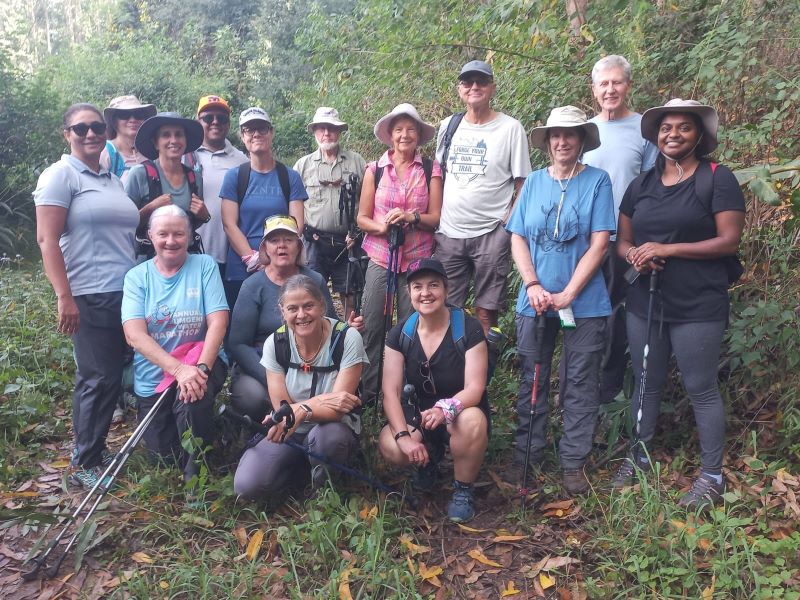
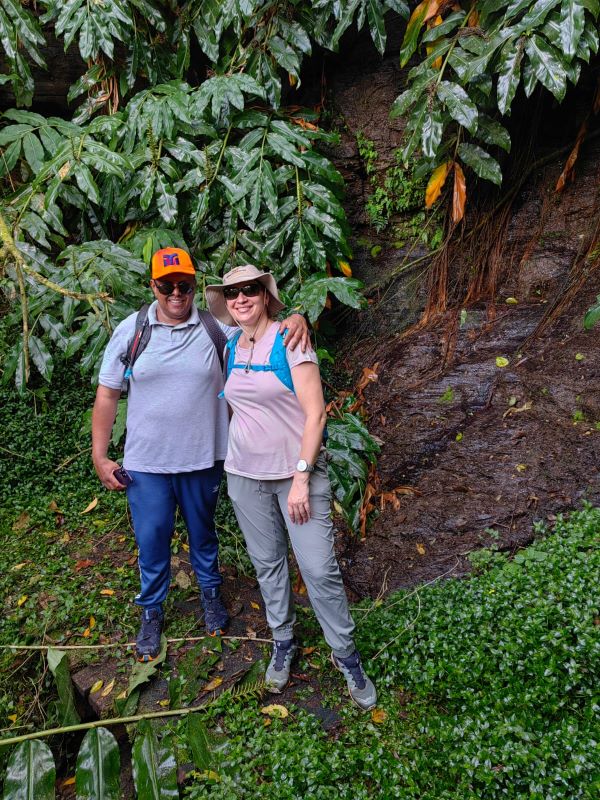
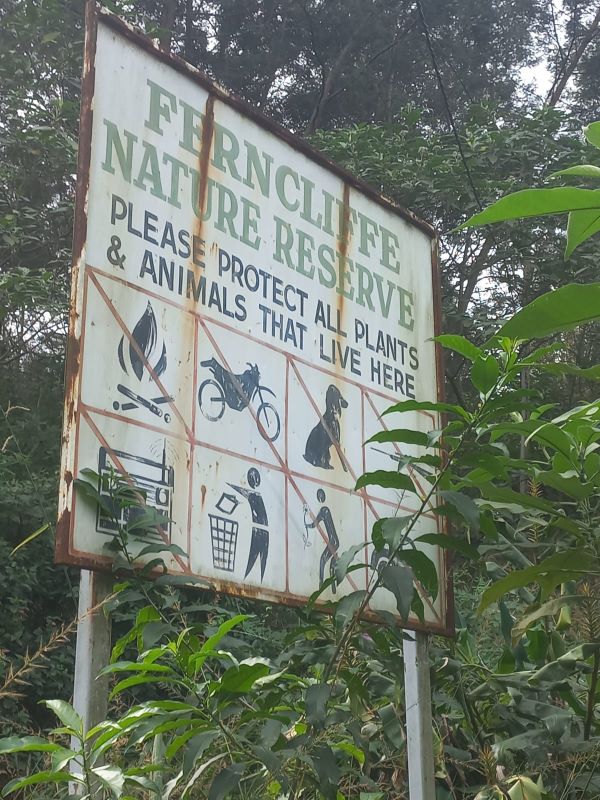
It was a relatively warm autumn morning when fifteen hikers gathered in the car park of the Hedgehog restaurant in Town Bush Rd. We had all opted to celebrate Freedom Day with a hike up in the Ferncliffe Nature Reserve that many of us see regularly but don’t always notice.
The hike had been ably organised by Hettie and our leader was Graham Keit. Graham gave us a briefing before we moved our cars to the start of our hike up the hill. The weather promised a hot day of at least 28 degrees so it was fortunate that most of the hike would be in the shade of forest and plantations.
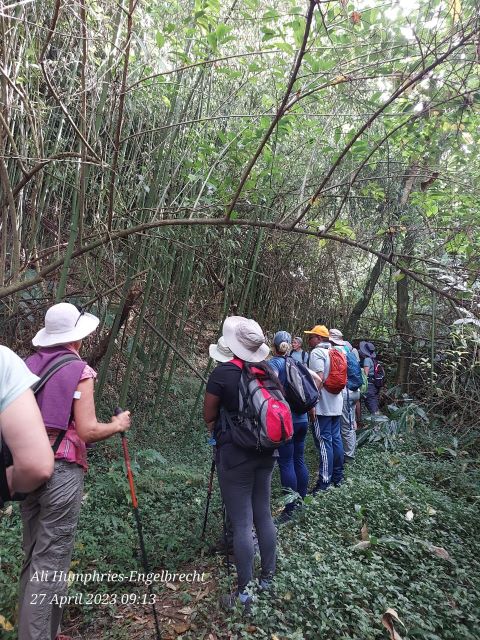
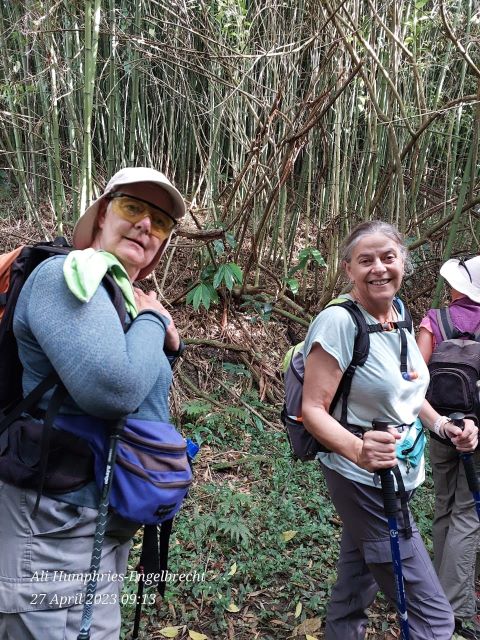
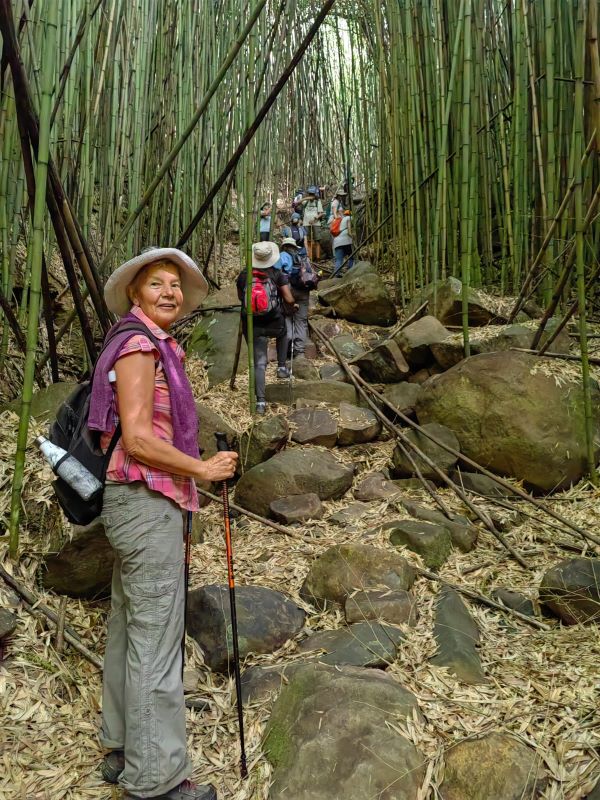
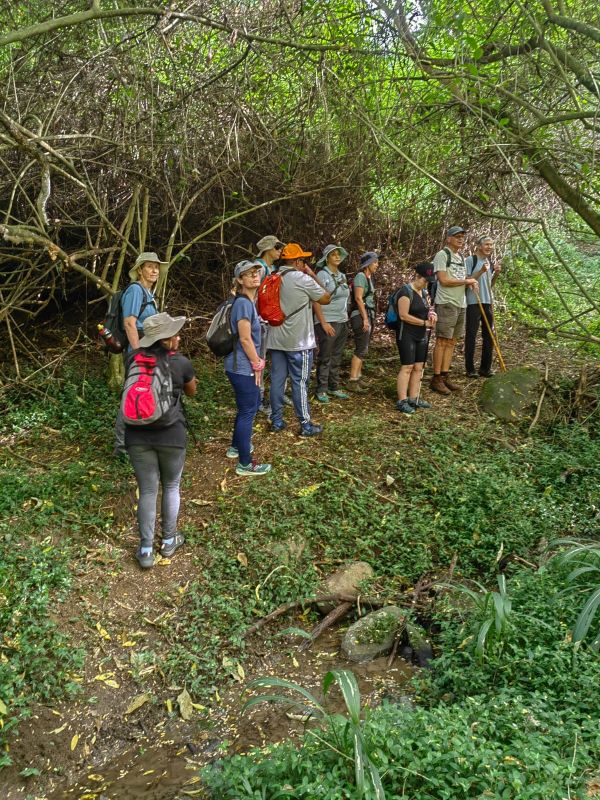
The first “forest” we encountered was the other-worldly and fascinating bamboo forest.
It was amazingly quiet and ethereal.
The route up through the bamboo was quite steep with large black rocks and dead bamboo poles to clamber around and over.
Bamboo forest
Bamboo forest
Bamboo forest
One of the striking things about the bamboo forest is that once you are properly into the forest, the earth is covered in old bamboo leaves but there is virtually nothing else that lives under the bamboo. Presumably the shade created by the dense and tall bamboo and the mat of bamboo roots under the surface of the earth are just too exclusive of other life forms.
That and the fact that the bamboo grows and spreads incredibly quickly makes this alien species a very real threat to the biodiversity of Ferncliffe.
Bamboo forest
Bamboo forest
Bamboo forest
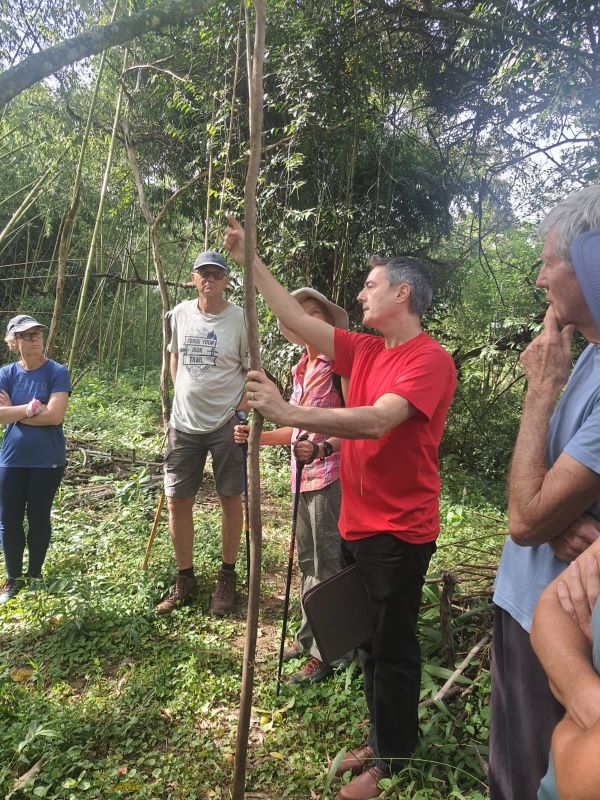
Once we emerged from the bamboo forest we met up with Conner Cullinan who, with his partner Janine, run a project to rewild and restore the indigenous forest that used to cloak the Ferncliffe area.
Conner gave us a wonderful talk on the project and its critical importance to one of the few of the critically endangered mistbelt forest areas left in KwaZulu-Natal.
The project tackles the ongoing problems of alien invasive species which are taking over the indigenous vegetation, as well as the process of replacing alien plants with indigenous trees. A substantial number of trees have already been planted, each one is monitored closely and is surrounded by a barrier made from bamboo (it does have its uses) to protect against being nibbled by bushbuck.
Connor Cullinan & Hettie
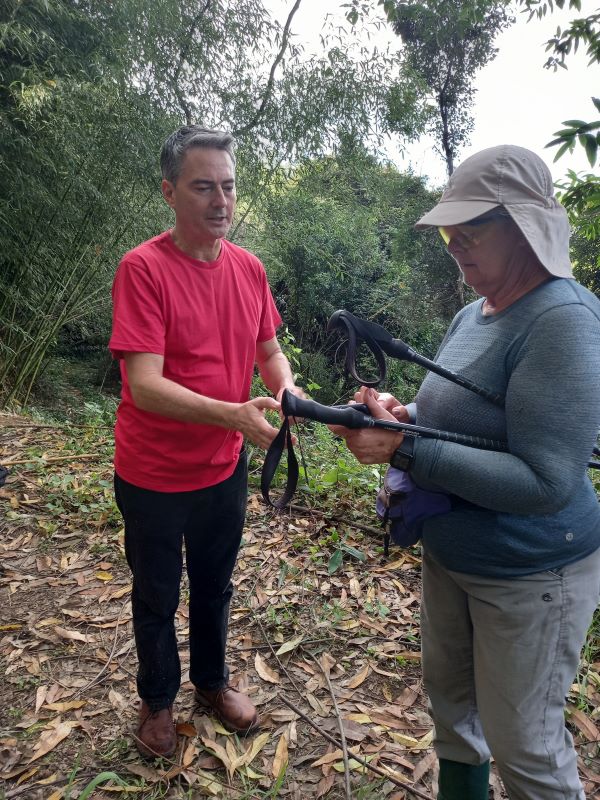
Connor showing us a snare
It is heart warming to learn what they are doing and how they are going about it. There is collaboration with various experts and with the university to ensure things are done in the correct manner. Where possible, alien plant eradication is being done without the use of herbicides.
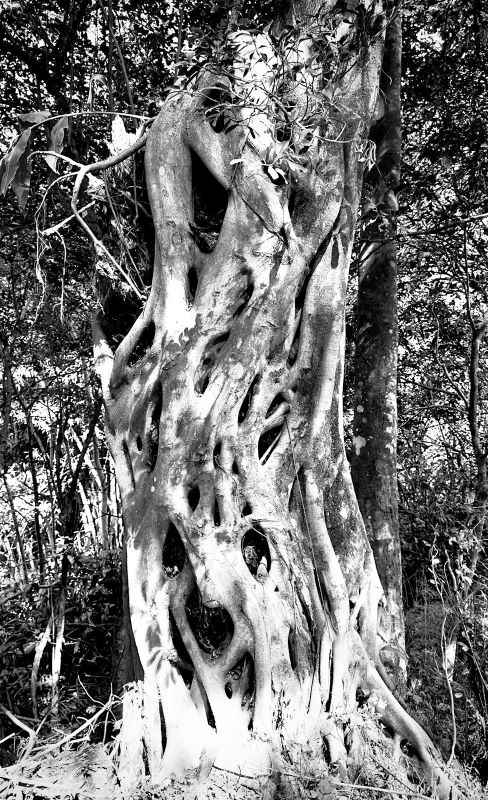
Connor told us that one way to get rid of a large alien tree is to plant a strangler fig tree right next to it. Over time the strangler fig encases the target tree with a web of roots that eventually merge into one another to form a trunk for the fig tree.
The target tree gradually gets smothered and eventually dies. Later on in the hike we actually walked past a strangler fig with an unknown type of tree rotting away in the middle of its trunk formed from lattice of roots.
Stangler fig
Yellowwood
It is truly a wonderful initiative and an inspiring story. The Ferncliffe Non Profit Company is now also officially associated with The United Nations Decade on Ecosystem Restoration. To find out more about, or contribute to, Ferncliffe rewilding, please visit their website www.ferncliffe.org . You will also find them on Facebook and Instagram (@ferncliffeforestwilding).
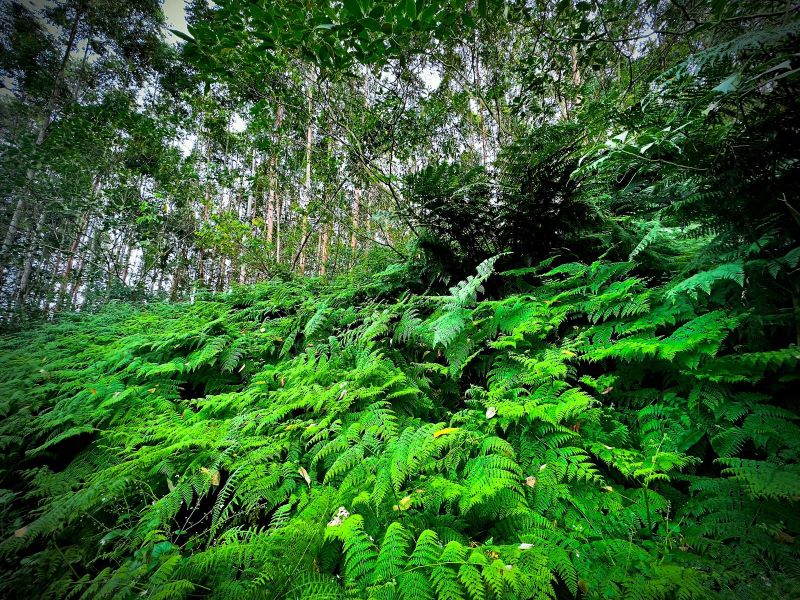
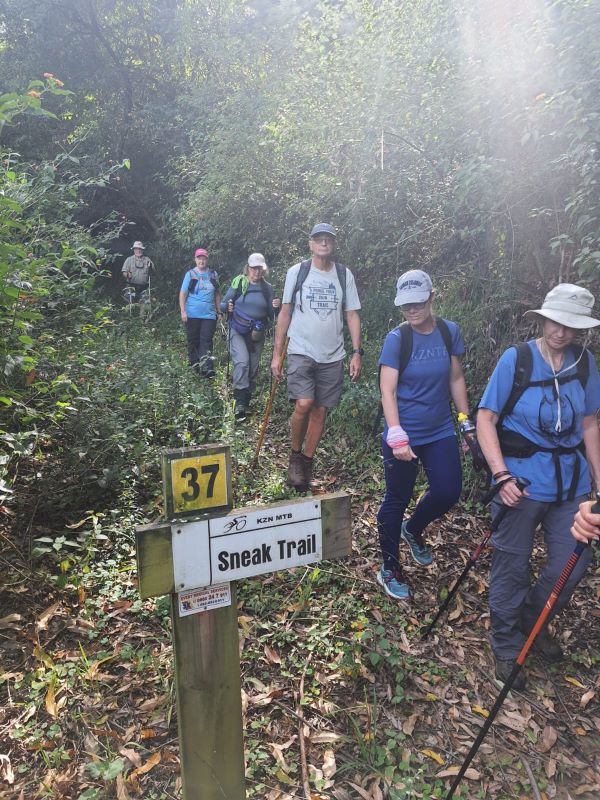
Once we said our goodbyes to Conner, we shouldered our day packs once again and set off to climb further up and along the hill via a mix of overgrown paths and neglected forestry roads going through beautiful stands of ferns, small patches of indigenous forest and plantations.
Along the way it was apparent how much work needs to be done – the area is beset by bugweed (many tree-sized), lantana, Mauritius thorn and wild ginger to name but a few.
Ferns
By this time the day had started to get rather hot and the trees, whether or not they were aliens, were most welcome. So we had a couple of “stand around and get-your-breath-back breaks”. Some steep sections tested the leg muscles of those of us that aren’t quite as fit as we could probably be, and at a couple of places a steep drop next to the path had a couple of us with ‘fear of heights’ issues a bit nervous.
We also saw some of the insane cycle tracks and jumps in the plantations and shook our heads at the apparent insanity of down hill mountain biking.
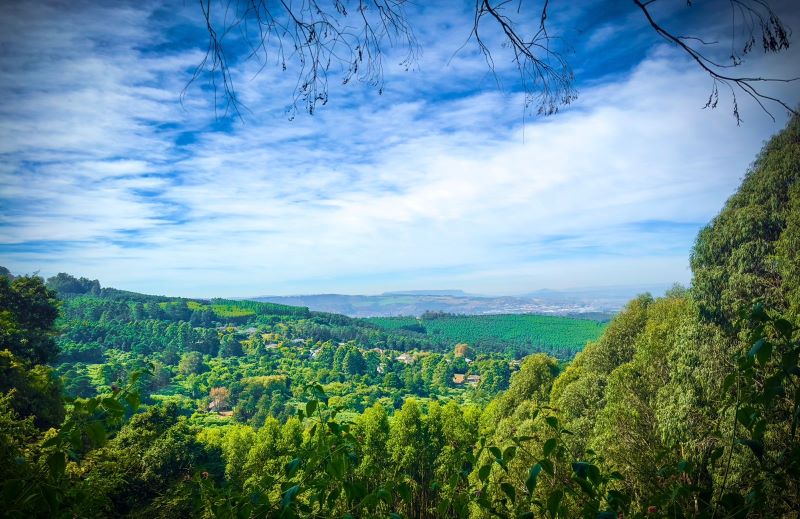
View over Pietermaritzburg
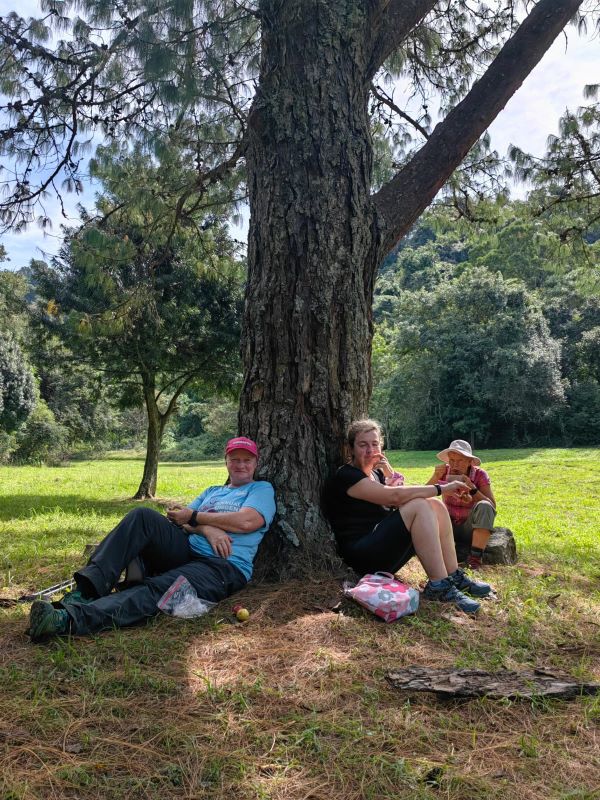
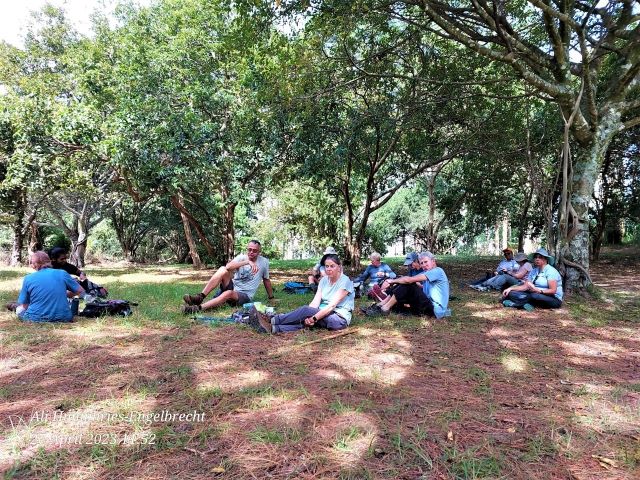
Eventually we made it to the picnic site which was very pleasant under the shade of trees scattered in bright green grass. We parked off to relax, chat, eat and for some, dream of using lemons on a nearby lemon tree in G&Ts.
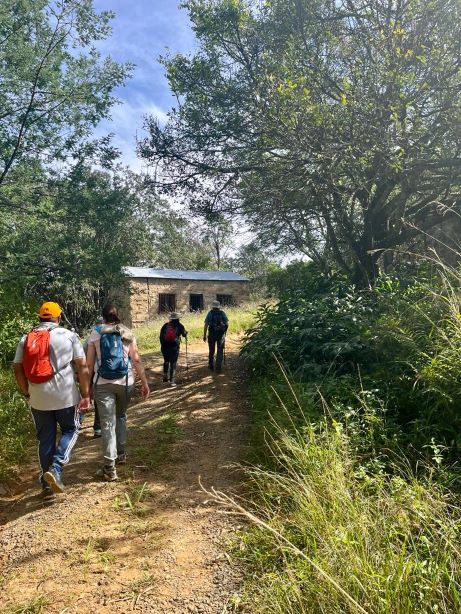
Approaching the picnic site
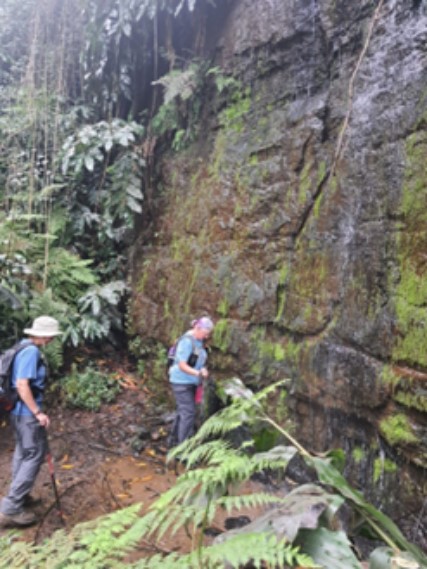
Once we had recovered and replenished our energy stores, we took a more leisurely walk down through the reserve via a small waterfall.
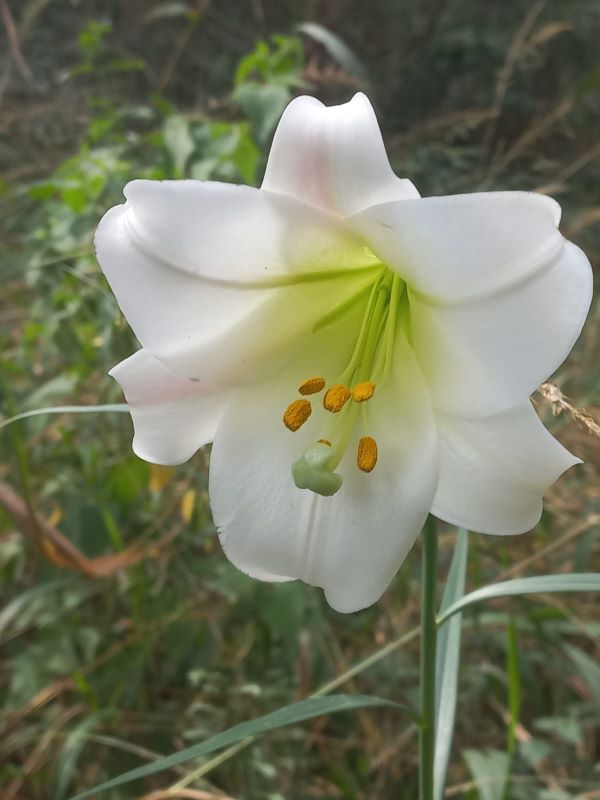
There were some beautiful flowers to be seen on the way but sadly, some of them are alien invasive species. Beauty can also be deadly ( to the environment and biodiversity at least)
Invasive Lantana
Invasive St joseph Lily
The distance hiked was approximately 9.6km. It had been a wonderful day with good exercise, fresh air, good company and a fascinating experience learning about what can be done to save some of the natural places that have been taken for granted and nearly lost.
Thanks to everyone on the hike with a special thanks to our leader, Graham and of course to Hettie. A Freedom Day well spent.